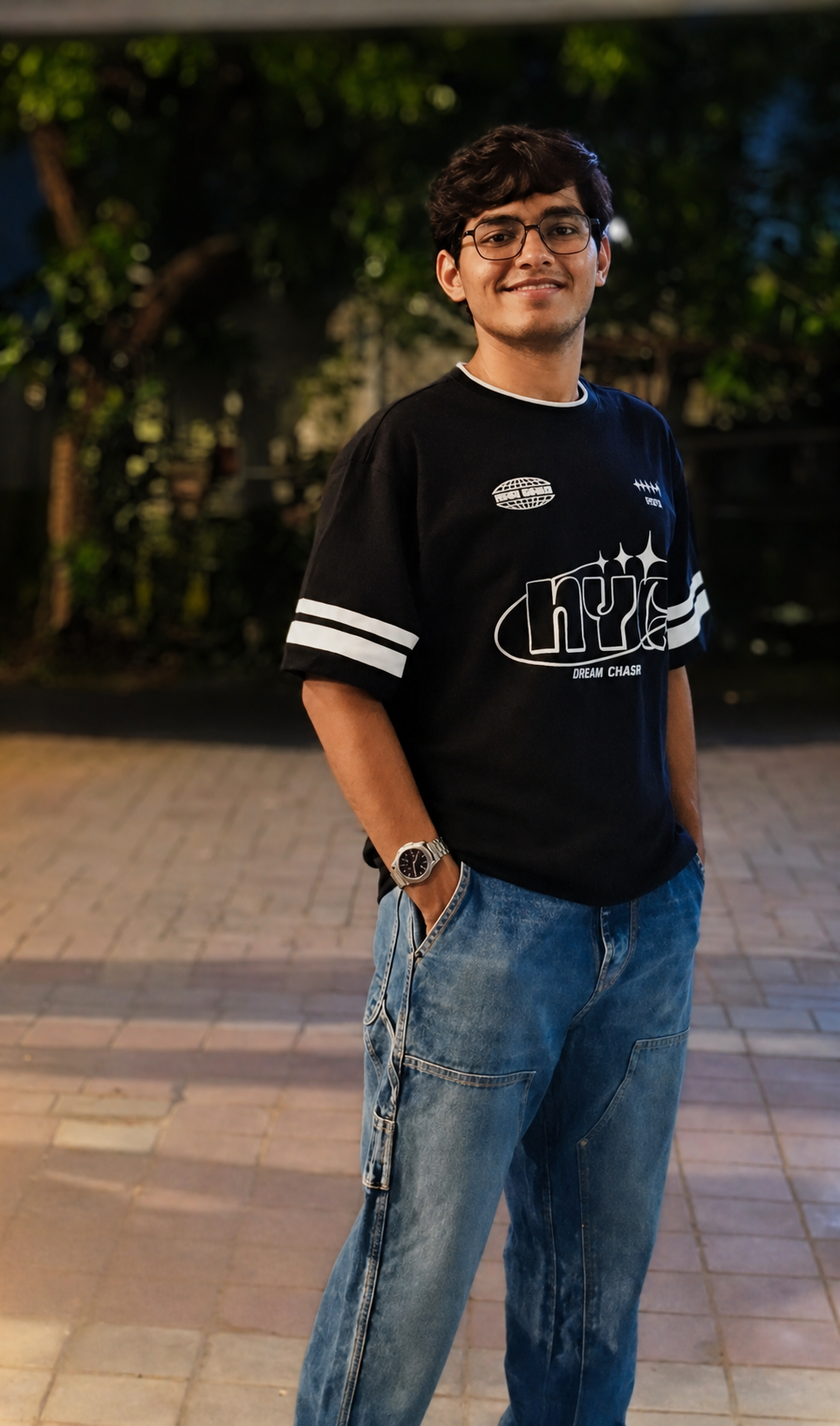
Mohit Joshi
Researcher at Indian AI Research Organization & UCSF Department of Medicine
I got into machine learning research through the medical domain: starting with medical reasoning in language models, then moving into uncertainty quantification for clinical NLP, and eventually into computer vision for stroke segmentation, where I designed a novel mathematical loss function that became my undergraduate thesis.
Alongside this, I started working with Dr. Vivek Rudrapatna at UCSF on applying reinforcement learning to sparse medical data -specifically drug repurposing from electronic health records. That work is pushing me toward what I'm most interested in now: non-rewardable RL for language models and studying consciousness in recursive language models.
My research interests sit at the intersection of Diffusion Language Model, Domain Adaptation (Robotics), and AI Safety. I'm drawn to problems like implicit rewards (Non-rewardable RL) through Epiplexity & statistical distribution in reasoning through Recursive Language Model.
I am also interested in exploring other areas, for the sake of "Serendipity" in my Research, currently I am interested in Scientific Computing & Quantitative Biology (Dynamical Modelling).
Experience
-
Indian AI Research Organisation (IAIRO) Aug 2026 – PresentPre-training ResearcherResearch on large-scale model pre-training: exploring training dynamics, data curation, and architectural design of foundation models.
-
University of California San Francisco (UCSF) Apr 2026 – PresentVisiting Researcher (Collaboration)Advisor: Dr. Vivek Rudrapatna | Department of MedicineOffline RL and causal inference for drug repurposing using EHR data. Building emulation frameworks to evaluate drug-repurposing candidates using LINCS L1000.
-
Indian Institute of Technology Bombay (IITB) Aug 2025 – Jun 2026Visiting Researcher (Internship) & Exchange SemesterAdvisor: Dr. Kshitij Jadhav | Koita Centre for Digital Health, Dept. of CSDesigned the Size Penalty Loss for stroke segmentation, built multimodal imaging pipelines, worked on uncertainty-aware medical reasoning and mechanistic deep learning for neurodegeneration. Coursework in Computer Vision and Biophysics.
-
Indian Institute of Technology Jodhpur (IITJ) May 2025 – Jun 2025Visiting Researcher (Internship)Advisor: Dr. Sucharita Dey | Biosciences & Bioengineering DepartmentDeveloped an automated protein–DNA interface analysis pipeline in Snakemake. Containerized the workflow with Docker, reducing setup time by 90%+.
Education
Institute of Advanced Research
Bachelor of Technology in Biotechnology
Indian Institute of Technology Bombay
Semester Exchange Student | Researcher, Koita Centre for Digital Health, Dept. of CS
Courses: Computer Vision (medical imaging), Game Theory in Evolutionary Dynamics(by Prof Supreet Saini) & Biophysics
Teaching
SLM++ Bootcamp · Cohort 1Courses / MOOCs Taken
Selected independent courseworkIntroduction to Flow Matching and Diffusion Models 2026
Generative AI with Stochastic Differential Equations
- Instruction
- Peter Holderrieth (lectures), Ron Shprints and Ezra Erives (labs)
- Sponsor
- Prof. Tommi Jaakkola, MIT CSAIL
- Format
- Five mathematical lectures and three guided implementation labs
A theory-first and hands-on introduction to modern flow and diffusion models. The course develops generative modeling from ordinary and stochastic differential equations, then connects the mathematics to flow matching, score matching, guidance, latent representations, and neural architectures. The labs culminate in building the core components of a latent diffusion model from scratch.
Topics: ODEs and SDEs, Fokker-Planck and continuity equations, flow matching, denoising score matching, classifier-free guidance, VAEs, U-Nets, Diffusion Transformers, discrete diffusion, and continuous-time Markov chains.
Imitation Learning: A Series of Deep Dives
A general framework for learning from demonstrations, feedback, and interventions
- Instructor
- Prof. Sanjiban Choudhury
- Affiliation
- Assistant Professor of Computer Science, Cornell University
- Format
- Ten video lectures progressing from foundations to interactive imitation learning
A focused study of how agents learn policies from expert behavior and how those policies fail when their own actions move them away from the training distribution. The series builds a unified view of demonstrations, corrective feedback, and human interventions, then connects these ideas to interactive learning for agents operating in real environments.
Topics: behavior cloning, covariate shift, feedback-driven learning, expert demonstrations, interventions, interactive imitation learning, no-regret perspectives, and applications in robot decision making.
Research Projects
Undergraduate Thesis
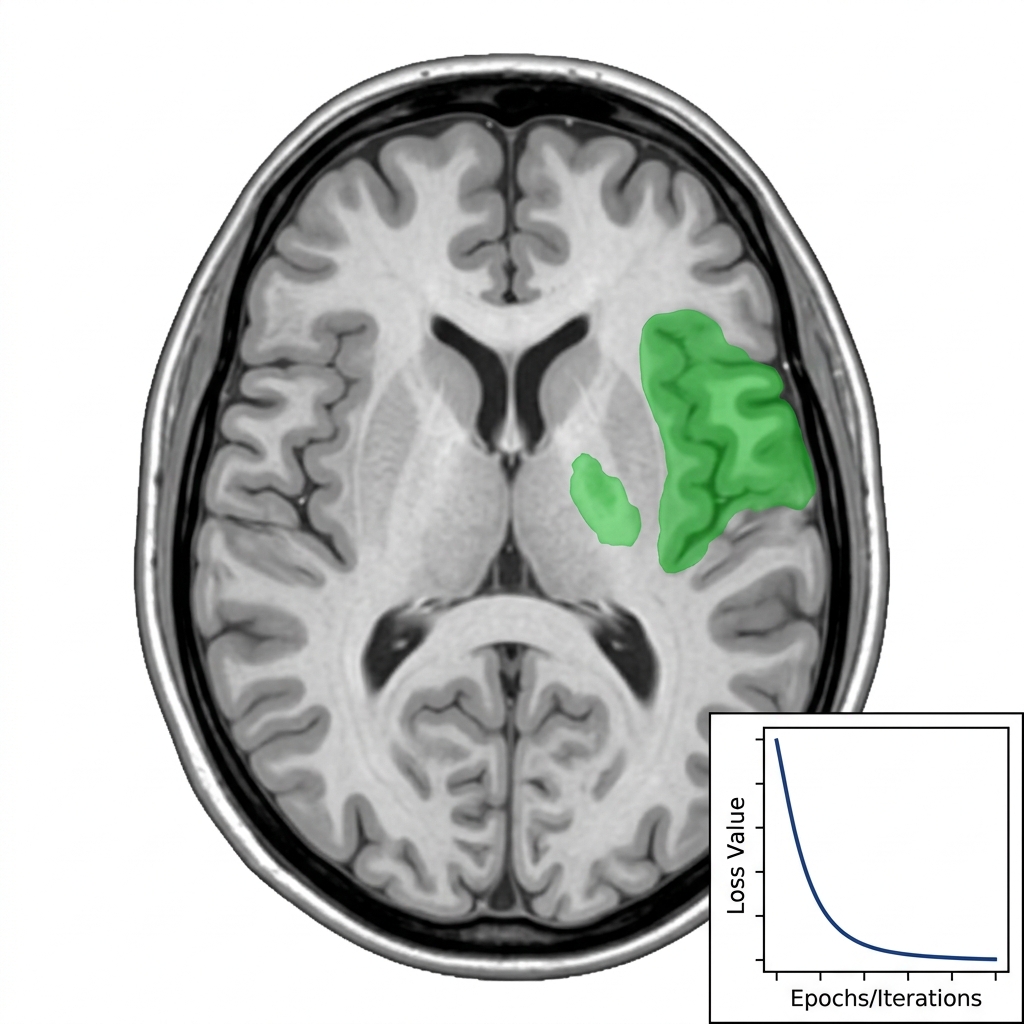
Size Penalty Loss: "What Dice Misses" -Size-Stratified Volume Regularization for Ischemic Stroke Lesion Prognostication
Supervised by Dr. Kshitij Jadhav (IIT Bombay) · May 2026 · Patent anticipated
Small ischemic stroke lesions are difficult targets for deep segmentation models because the positive class can occupy a tiny fraction of the image volume, and voxel-overlap objectives can remain numerically acceptable while clinically important small lesions are missed. This thesis introduces Size Penalty Loss, a continuous size-stratified auxiliary loss for medical image segmentation. The proposed term penalizes relative error between the predicted soft lesion volume and the ground-truth volume, with an exponential weight that gives stronger optimization pressure to smaller lesions. Evaluated with a 3D Attention U-Net using ADC, DWI, and an ADC-DWI mismatch channel on two ischemic stroke MRI datasets. Size Penalty improves missed-lesion count, detection, RVE, RQ, PQ, and ASSD -with the clearest gain in sub-milliliter lesions.
Ongoing
Drug Repurposing and EHR Environment Emulation via Offline Reinforcement Learning
Advisor: Dr. Vivek Rudrapatna · UCSF Department of Medicine · Apr 2026 – Present
Modeling Markov decision processes over EHR data with latent state representations to address sparsity, including Q-value gradient methods. Building an offline RL emulation framework to evaluate drug-repurposing candidates using public resources including LINCS L1000. The goal is to identify new drug targets from observational clinical data without running new trials.
Ongoing · Patent Anticipated
Acute Ischemic Stroke Prognostication -End-to-End Multimodal Framework
Advisor: Dr. Kshitij Jadhav · IIT Bombay KCDH · Jan 2025 – Present
Designed a multimodal medical imaging model using CT, CTA, DWI/ADC, and FLAIR for stroke lesion segmentation and outcome prediction, integrating volumetric features, vascular topology, and clinical variables in a U-Net architecture. Building an end-to-end framework combining 3D segmentation, vessel-level occlusion modeling, and state-space learning to estimate clot burden and predict 90-day outcomes (mRS) within 24h of admission.
IIT Bombay
Uncertainty-Aware Medical Reasoning in Language Models
Advisor: Dr. Kshitij Jadhav · IIT Bombay KCDH · Aug – Dec 2025
Developed a Bayesian region-detection model combining Monte Carlo Dropout for epistemic uncertainty with direct prediction of aleatoric variance, enabling robust, uncertainty-aware X-ray report generation. Implemented a Gaussian NLL objective that predicts bounding-box coordinates together with their inherent σ, allowing the system to flag spatially ambiguous regions. Built an uncertainty-aware gating mechanism that suppresses auto-generated sentences for low-confidence regions and prioritizes radiologist review.
IIT Bombay
Mechanistic Deep Learning for Predicting Neurodegenerative Disease Progression
Advisor: Dr. Kshitij Jadhav · IIT Bombay KCDH · Aug – Dec 2025
Developed a BLIP-2-inspired architecture interfacing frozen foundation models (Swin-UNETR for 3D MRI, scGPT for omics) with trainable Q-Formers to distill ADNI data into compact latent representations. Explored Amyloid-β and Tau pathologies as a multi-agent biological game, using cross-modal attention to identify mechanistic drivers. Prototyped continuous-time forecasting using neural ODE/SDE with adversarial training via the Gillespie algorithm.
IIT Jodhpur
Protein–DNA Affinity Interface Analysis Tool
Advisor: Dr. Sucharita Dey · IIT Jodhpur · May – Jun 2025
Developed an automated protein–DNA interface analysis pipeline in Snakemake to process multichain PDB files, integrating Python, Fortran, and shell scripts with Naccess, HBPLUS, and FreeSASA for comprehensive aggregation. Containerized with Docker, reducing setup time by 90%+. Submitted a detailed report covering objectives, protocol, and findings.
Self-Supervised
Immune Signature Analysis in Post-Acute COVID-19 Lung Sequelae
Jan – Apr 2025
Engineered a scalable scRNA-seq pipeline in R (Seurat, SCTransform) analyzing post-COVID lung T cells, identifying persistent pro-inflammatory signatures (IL32, CCL5, CD8A, NKG7). Reactome and DAVID pathway analysis revealed sustained T-cell cytotoxicity and IFN-γ signaling. Proposed an ODE model to translate static gene signatures into dynamic hypotheses of post-acute lung damage.
Exploratory Projects
Self-Supervised
Physics-Informed Neural Networks (PINNs) for Partial Differential Equations
Exploratory Project
Implemented Physics-Informed Neural Networks to solve the Burgers' equation and electrostatic potential through the Laplace equation. This project explores the integration of physical laws into neural network loss functions for data-driven discovery of partial differential equations.
Self_supervised
Symbolic Regression & Sparse Identification for SIR Epidemic Modeling
Exploratory Project
Conducted a comparative analysis between PySR (Symbolic Regression) and SINDy (Sparse Identification of Nonlinear Dynamics) to model epidemic spread using the SIR mathematical framework. This work examines the interpretability and predictive power of equation discovery methods.
News
| Aug 2026 | Started research at Indian AI Research Organisation (IAIRO) in Pre-training |
| May 2026 | Undergraduate thesis defended — "What Dice Misses": Size Penalty Loss |
| Apr 2026 | Began visiting research at UCSF, USA with Dr. Vivek Rudrapatna |
| Jan 2026 | Exchange semester at IIT Bombay, Koita Centre for Digital Health |
| Aug 2025 | Started research at IIT Bombay with Dr. Kshitij Jadhav |
| May 2025 | Research internship at IIT Jodhpur with Dr. Sucharita Dey |
| Feb 2025 | Best Poster Presenter -CME Immunology, Institute of Advanced Research |
| Mar 2024 | Best Poster Presenter -Annual Research and Innovation Conclave (ARIC) |
| 2024 | 3rd place -Gujarat Government Healthcare Hackathon |
Awards & Honors
- IITB Research Internship Award 2025–26 -selected for exchange semester at IIT Bombay from 3,000 candidates
- Best Poster Presenter -Enhancer Hijacking in Medulloblastoma, CME Immunology, IAR (Feb 2025)
- Best Poster Presenter -Dairy Wastewater Treatment Research, ARIC, IAR (Mar 2024)
- 3rd Place -Solutions for Healthcare Challenges, Gujarat Government Statewide Hackathon (2024)
- Project Funding -secured INR 100,000 for data-driven innovation projects (Bubble Labs & Curiosy, 2022–2024)
Get in Touch
Interested in collaborating, have research questions, or just want to chat? Drop me a message.